Geopolitical Risk Simulation for Enterprise Planning

Most enterprise risk frameworks weren't designed for geopolitical uncertainty. They were built for financial risk, operational risk, compliance risk — domains where historical data is abundant and the relationships between variables are relatively stable. Geopolitical risk is different in kind. It involves state actors with strategic intent, information asymmetries, and threshold effects that make extrapolation from history genuinely treacherous.
Why Traditional Enterprise Risk Management Falls Short
The standard ERM framework gives you a risk register, heat maps, and periodic reviews. For geopolitical risk, this produces a document that says something like "Taiwan Strait conflict: high impact, low-to-medium probability, mitigation: supply chain diversification." Acknowledged. Filed. Forgotten. That's technically correct and practically useless. It doesn't tell you what supply chain diversification costs against what probability threshold, how fast you'd need to act if early warning indicators emerged, or which business units are most exposed to which specific supply pathways.
In our experience across enterprise deployments, traditional ERM gives leadership false confidence. The risk is acknowledged, it's on a list, therefore it's managed. Simulation changes that dynamic by forcing the organization to actually trace impact pathways rather than name categories.
What Geopolitical Simulation Actually Models
Geopolitical simulation in the enterprise context is not wargaming and it's not academic political science. It's structured scenario analysis that models three things: triggering events, causal propagation chains, and business impact quantification. Period.
A Taiwan Strait simulation in Principle's framework, for example, starts with a scenario specification: the Taiwan January 2024 election produced a DPP victory with 40.05% of the vote, which Beijing characterized as a "separatist result." From that event, the simulation branches: In Branch A (55% probability, 18-month horizon) — continued PLA military exercises and economic pressure, but no kinetic conflict. Supply chain impact: modest, primarily affecting confidence-driven inventory builds. In Branch B (30% probability) — escalation to a partial blockade scenario, disrupting commercial shipping through the Strait. In Branch C (15% probability) — full kinetic conflict triggering allied response and full export control activation.
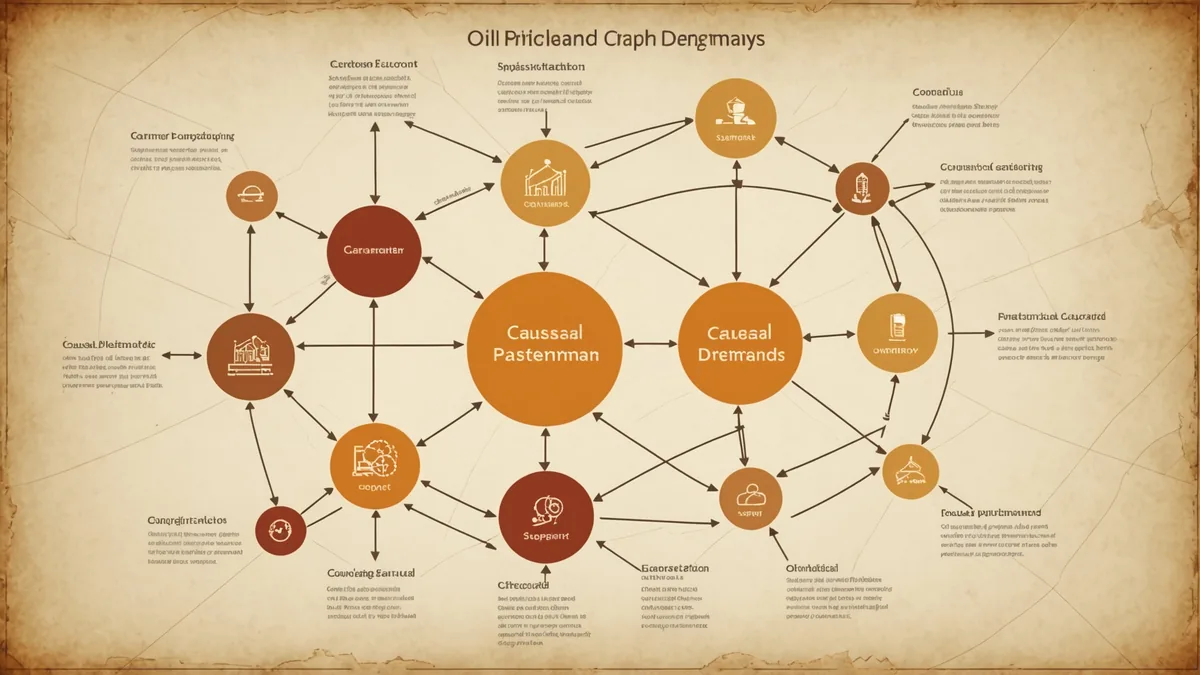
Each branch then propagates through industry-specific causal graphs. For a company like Apple with 90%+ of its advanced component sourcing tied to Taiwan and the Taiwan Strait corridor, Branch B alone represents a revenue impact of $12-18 billion over six months, based on 2023 production concentration data.
Building the Simulation Baseline
Effective geopolitical simulation requires three inputs that most enterprises don't have readily available. Three. Often missing. The first is a mapped supply network: not just tier-1 suppliers, but tier-2 and tier-3, with geographic concentration analysis. The second is a quantified exposure model: which revenue streams, cost centers, and operational processes are connected to which geographic risk zones. Third is a set of calibrated probability estimates for scenario branches.
Here's the thing about that third input: you don't need perfect probability estimates to run useful simulations. What you need is probability estimates that are honest about their uncertainty. A range of 25-40% probability is more useful than either "low probability" or a spuriously precise 32%. The range communicates your confidence level and allows sensitivity analysis — how does the decision change if this probability is at the low end versus the high end of the range?
Real-World Anchors: Simulations That Should Have Been Run
Several geopolitical shocks in recent years had detectable precursors that simulation frameworks would have captured. The Houthi attacks on Red Sea shipping that began in November 2023 weren't a bolt from the sky. Not even close. Yemen's Houthi movement had been making explicit threats tied to the Gaza conflict since October 2023. A simulation framework tracking Middle East escalation sequences would have flagged Red Sea corridor disruption as a live scenario by mid-October, six weeks before the first commercial vessel attack.
For companies with significant Red Sea exposure — any manufacturer importing from Asia through the Suez Canal, any energy company with Middle East tanker routes — six weeks of advance scenario planning would have been the difference between hedging freight costs proactively and scrambling to renegotiate logistics contracts after rates had already tripled.
The CHIPS Act as a Simulation Benchmark
The CHIPS and Science Act signed in August 2022 is a useful benchmark for evaluating geopolitical simulation frameworks. The legislative trajectory was visible in mid-2021 when the Senate Innovation and Competition Act passed with bipartisan support. A simulation run in Q3 2021 with "US semiconductor export controls expand" as a branch scenario would have had 18+ months to inform capital allocation and supply chain decisions before the law took effect.
Fact: companies that ran this scenario in 2021 had 18 months to act. Companies that treated it as too uncertain to model had a six-month window after enactment to scramble. The asymmetry between early movers and late movers on CHIPS Act supply chain repositioning is estimated at $2-4 billion in repositioning costs across the semiconductor-dependent manufacturing sector.
Integrating Simulation Into Board-Level Risk Reporting
One of the structural challenges we see in enterprise simulation adoption is the gap between the sophistication of the simulation output and the format of board-level risk reporting. Boards receive quarterly risk updates. Simulations run continuously. Every quarter. The translation challenge is real.
The approach that works: define a set of "sentinel scenarios" — five to eight named geopolitical scenarios that the board monitors on an ongoing basis. Each sentinel scenario has a current probability assessment, a current impact quantification, and a "probability change threshold" that triggers an unscheduled board briefing. When Taiwan Strait Branch B probability crosses from 25% to 35%, that triggers a briefing. When it drops back below 20%, that also triggers an update. The board isn't managing the model; they're consuming curated signals from it.
What Simulation Can't Do
Honestly, overpromising on simulation capability is the fastest way to destroy adoption. Simulation cannot predict when geopolitical events will occur. It cannot account for genuinely novel scenarios with no historical analog. It cannot substitute for human judgment on questions of strategic priority.
What simulation can do is force structured thinking about causal chains before the crisis, ensure impact quantification is done in advance rather than in panic, and give leadership a pre-analyzed decision framework that can be activated rather than built under pressure. For teams ready to explore how geopolitical simulation integrates with existing risk infrastructure, our platform overview details the technical architecture and integration methodology.