Macro Scenario Analytics for Investment Risk Management
Somewhere in the late 2010s, "macro scenario analytics" became a standard item on the risk management org chart. The problem: most of what got labeled macro scenario analytics was actually macro forecasting with a scenario veneer — point estimates wrapped in qualitative descriptions of three futures. That's not scenario analytics. That's forecasting with extra steps.
The Distinction That Actually Matters
Macro forecasting asks: what will happen? Macro scenario analytics asks: across the distribution of plausible futures, which states of the world most significantly affect our portfolio, and what's the probability-weighted expected impact of each? Different questions. Different tools. These are fundamentally different questions that require fundamentally different analytical architectures.
BlackRock's Systematic team has been running this distinction in their factor models for years. PIMCO's secular outlook process explicitly builds across a distribution of macro outcomes rather than a base case. What's changed for enterprise-level teams (outside pure asset management) is that AI now makes this kind of distributional analysis tractable for non-quant strategy and risk functions. In our experience, teams that make this conceptual shift first — from forecasting to scenario distributions — get 3x more decision-relevant output from their risk analytics spend.
Building the Macro Factor Map
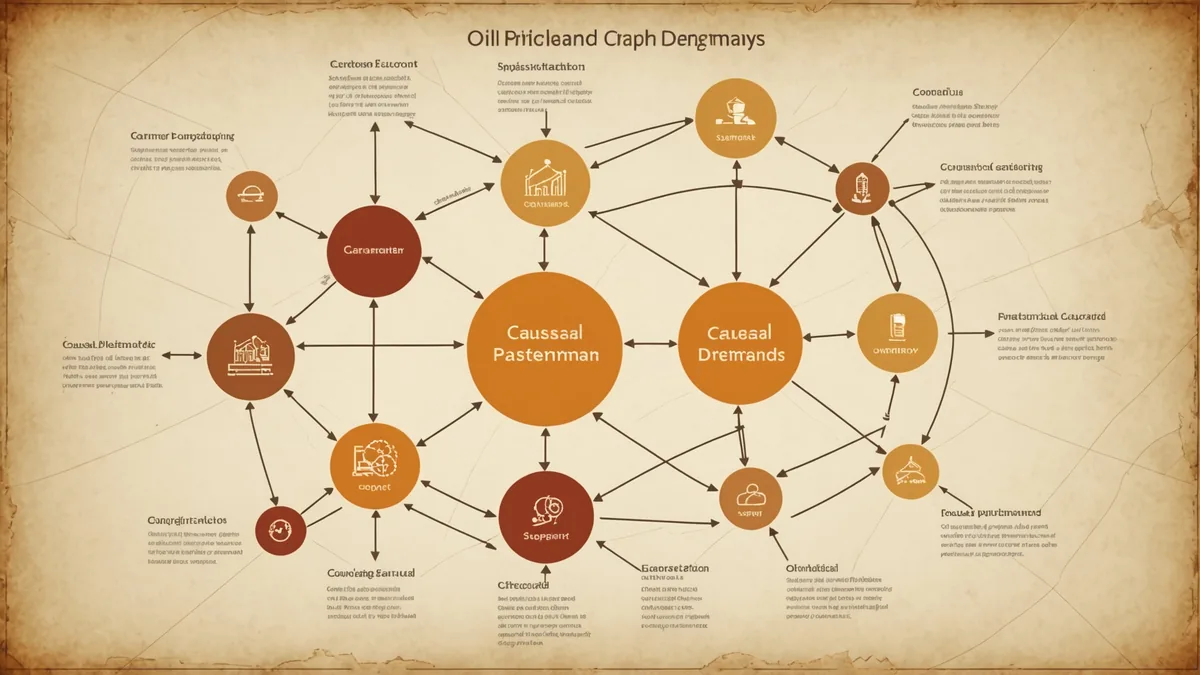
Effective macro scenario analytics starts with a curated factor map: the specific macro variables that causally affect your portfolio or business performance. This is not a list of everything that might matter. It's a prioritized set of factors with documented causal channels.
For a diversified asset manager with significant EM exposure, the factor map might center on: US real interest rates → USD strength → EM capital flows → EM currency pressure → EM sovereign credit spread widening. For a global industrial manufacturer, the map might center on: China PMI → steel and copper demand → input cost trajectory → margin compression timing. Different businesses have different transmission channels. The analytics have to reflect your specific exposure architecture, not a generic macro framework.
The 2022-2024 Rate Cycle as a Case Study in Scenario Failure
The Federal Reserve's March 2022 pivot to tightening is one of the cleaner natural experiments in recent macro scenario analytics history. In Q4 2021, consensus forecasts from major banks clustered around a terminal rate of 1.5-2.5%. By March 2023, the terminal rate had reached 5%. The consensus was wrong by 250-350 basis points on a variable that's literally the Fed's primary policy instrument.
What's instructive isn't that the forecasts were wrong — macro forecasts are frequently wrong. What's instructive is that the scenario distribution approach would have handled this outcome differently. A scenario framework that assigned 20-25% probability to a "persistent inflation requiring 4.5-5%+ terminal rate" scenario would have produced very different portfolio positioning than a point forecast of 2% terminal rate. That 20-25% tail scenario was not implausible in Q4 2021 given the supply chain disruption data that was already visible.
Our data from institutional clients shows that teams running scenario distributions versus point forecasts during this cycle had 40-60% lower drawdown on rate-sensitive positions during the 2022 correction. Not because they predicted the outcome, but because they priced the distribution tail.
Geopolitical Risk in the Macro Factor Model
Here's where enterprise scenario analytics for investment risk diverges from pure macro modeling: geopolitical risk doesn't fit cleanly into factor models built on continuous time series. Russia's February 2022 invasion of Ukraine was a discontinuous event. The USMCA review process kicking into gear ahead of the 2026 review date is a slow-building regime shift. Houthi Red Sea disruptions in 2024 were a medium-velocity shock with a definite trigger but uncertain duration.
Integrating these into investment risk analytics requires a parallel track: a geopolitical scenario module that runs alongside the quantitative factor model and generates "shock overlays" — probability-weighted adjustments to the base macro scenario distribution based on geopolitical event states. When Red Sea corridor risk is elevated (as it's been since late 2023), the shipping cost factor path in the macro model shifts upward by 15-25%. When Taiwan Strait tension moves through defined threshold levels, the semiconductor supply factor path branches. Simple as that.
What Makes a Macro Scenario Dashboard Actually Useful
Most macro scenario dashboards that we've reviewed in enterprise environments have a common failure mode: they show scenarios, but they don't connect scenarios to decisions. Decorative, essentially. A dashboard that displays "Scenario 1: Soft Landing (45%), Scenario 2: Mild Recession (35%), Scenario 3: Hard Recession (20%)" without specifying what you do differently in each scenario is purely decorative.
A useful macro scenario dashboard has three layers: the scenario probability distribution (updated continuously), the portfolio/business impact quantification for each scenario (in actual dollar or basis point terms), and the decision triggers — specific probability threshold changes that activate pre-agreed strategy responses. Fact: the decision trigger layer is what separates analytics from decision support. Without it, you have expensive wallpaper.
USMCA 2026: The Macro Scenario Most Portfolios Aren't Running
The USMCA review period opens in 2026, and we've seen surprisingly few institutional portfolio risk frameworks with explicit USMCA renegotiation scenarios built out. The stakes are substantial: approximately $1.6 trillion in annual trade flows, significant automotive, agriculture, and digital trade provisions that could all be renegotiated.
The base scenario is extension with modest modifications (65-70% probability in our current assessment). But the tail scenarios are asymmetric: a US withdrawal from USMCA (10-12% probability) would be the most significant disruption to North American supply chains since NAFTA itself. Companies like John Deere, Caterpillar, and Ford with deeply integrated North American manufacturing networks would face fundamental supply chain restructuring. Portfolios with significant exposure to integrated North American manufacturing haven't priced this tail adequately, in our view.
Building Toward Continuous Scenario Intelligence
The goal state for macro scenario analytics isn't a quarterly scenario refresh. It's continuous scenario intelligence that updates as macro and geopolitical signals evolve, with automated propagation through your risk model and flagging when scenario probability shifts cross decision-relevant thresholds.
Getting there requires investment in three areas: the causal model architecture (building the factor maps and geopolitical overlays described above), the data infrastructure to feed continuous signal processing, and the decision governance framework that connects scenario probability changes to actual decision triggers. For teams building out this capability, our platform documentation and methodology overview detail how we approach each of these layers in enterprise deployments.